The lead times are longer, the carrier market is thinner, and the road system covers less than a fifth of the state. Here's what shippers need to know.
By Justin Burgess, General Manager – Alaska, Odyssey Logistics
Every winter, Alaskan oil fields build ice roads for heavy trucks, creating direct access to remote areas using frozen water and snow that doesn’t disturb the fragile tundra underneath. They melt and disappear each summer. These ice roads, durable yet impermanent, show that Alaska logistics is built on paradoxes.
The instincts traditional lower-48 shippers bring about lead times, carrier availability, and inventory cycles don’t transfer here. They fail consistently, often compounding across every leg of a shipment.
Alaska is the nation’s cul-de-sac — the end of a long road West. It has unique requirements for shipper success that require a different kind of logistics partner, one with an infrastructure already established and a deep familiarity with a supply chain that operates by its own rules.
Not every shipper can meet customer expectations in Alaska—success depends on proven in-state capability, tight multimodal coordination, and experience navigating seasonal constraints.
These are the challenges shippers face in Alaska, and how Odyssey Logistics, with more than 80 years of combined Alaskan experience, helps them succeed.
Alaska vs. the lower 48: how the logistics math changes
| Lower 48 logistics | Alaska logistics | |
| Transit time (domestic) | 1–5 days typical | 4–6 weeks door-to-door |
| Transit time (overseas sourcing) | 3–6 weeks | 2–3 months |
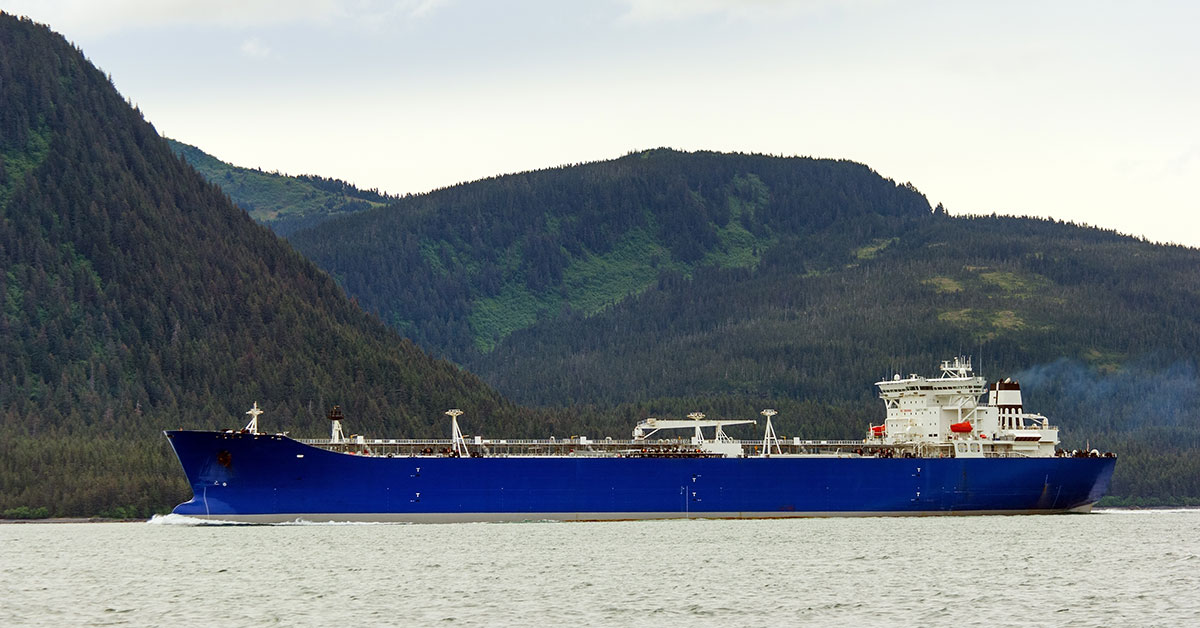
| Carrier options | Broad, competitive market | 2 ocean carriers, limited barge capacity, seasonal shutdowns |
| Road access | Near universal | ~14-18% of communities on the road system |
| Economic cycle | Real-time national alignment | 12–18 months behind lower-48 trends |
| Winter operations | Standard | Equipment failures at -30 to -40°F, specialized solutions required |
| Inventory planning horizon | Weeks | Months: miscalibration takes time to correct |
| Carrier rate leverage | Available to most shippers independently | Requires consolidated volume on the trade lane |
Alaska’s landscape and infrastructure can limit your options
Only 14-18% of communities are accessible by road, and the carrier market is structurally thin
Alaska has roughly 17,681 miles of public roads. Only about 35% are paved, and between only 14-18% of the state’s communities sit on the road system. For communities in western and arctic Alaska, barge service runs from late March through mid-September and stops entirely in winter. When temperatures drop and rivers freeze over, air freight fills the gap at a cost that rules it out for most commercial freight.
Getting freight here is only half the planning problem
Door-to-door transit runs four to six weeks domestically and two to three months from overseas — and Alaska’s economy moves on its own cycle
Alaskan shipping has longer lead times: door-to-door, domestic shipments can take four to six weeks, and overseas shipments stretch to two to three months.
Another planning challenge, however, is that national demand signals don’t map reliably onto Alaska demand. The state’s economy runs 12 to 18 months behind lower-48 cycles. A recession that registers in the continental US in January may not show up in Alaska purchasing behavior until the following year.
Shippers who apply lower-48 forecasting models directly to their Alaska inventory find themselves either overstocked or understocked. Order too little and you’ll wait a full lead time for replenishment. Order too much and you tie up capital in inventory that may move more slowly than forecasted.
What full-service logistics looks like in constrained conditions
Owned assets on the ground, carrier relationships across every mode, and proactive communication when conditions change
Over the course of decades, Odyssey Logistics has honed unique advantages to help shippers overcome all these challenges in Alaska:
A strong network of partners
Odyssey operates terminals in Anchorage, Fairbanks and Kenai-Soldotna, with consolidation points in Fife, WA, and California. For more than 5,000 customers — including major retailers, automotive parts distributors, health providers, and food and drug distributors — Odyssey has built carrier relationships across modes and consolidated volumes to give individual shippers rate leverage that they wouldn’t have independently.
Owned assets for cold-weather trucking
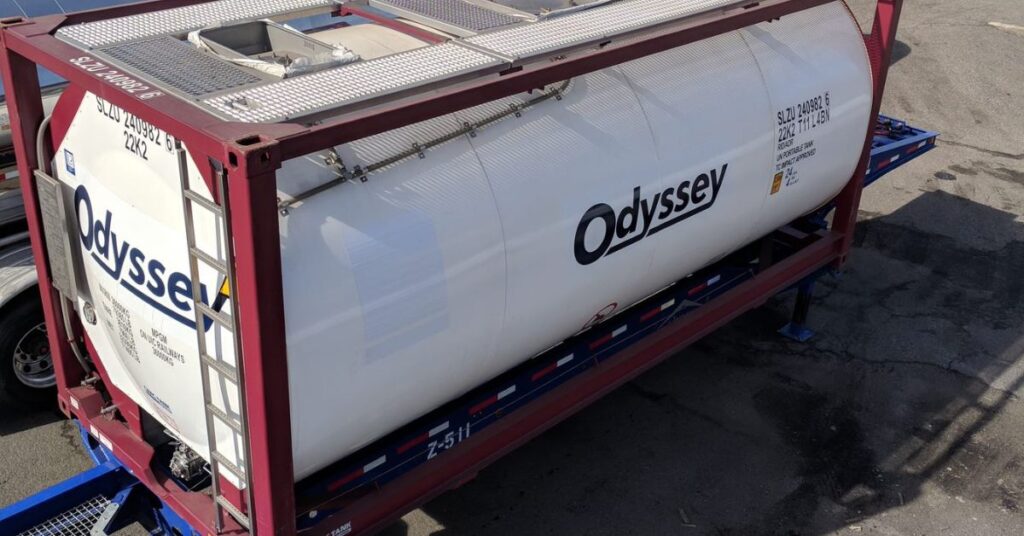
At 30 to 40 degrees below Fahrenheit, emissions sensors shut trucks down and forklifts fail. Odyssey customizes its fleet to endure these harsh conditions, including insulating fuel lines and diesel exhaust fluid (DEF) tanks. These specialized trucks keep freight on schedule when conditions would otherwise shut an operation down.
An inventory buffer
Odyssey also maintains distribution warehousing in Anchorage that functions as an inventory buffer for health providers, food and drug distributors, and retail customers, holding stock that facilities downstream can’t accommodate, making it available for pick-and-pull as customers need it.
Visibility through the worst storms
Odyssey scans freight at every terminal touch point, feeding the TMS so shipment status stays current. When an ocean carrier runs late or weather affects the roads, Odyssey notifies customers proactively. In a supply chain this long and constrained, this kind of active communication gives shippers tighter control over their freight.
Alaska rewards the shippers who prepare for it
80-plus years of combined Alaska experience means Odyssey already learned what you don’t want to find out on your first shipment
When ice roads disappears in summer, it’s not as though deliveries are no longer needed. Transportation becomes more resourceful, switching methods or modes to deliver the necessary equipment. This resourcefulness is part of what it means to be Alaskan, and it’s the bedrock of any sound shipping strategy. At Odyssey, we build that same Alaskan resourcefulness into every shipment, with a team that has spent its careers and lives here.
If you’re entering the Alaskan market, or trying to build out a leaner shipping operation, you need a partner that understands the constraints and knows how to work with them. Schedule a call with a member of our Odyssey team, and let’s talk about what it will take to get your freight moving up here.