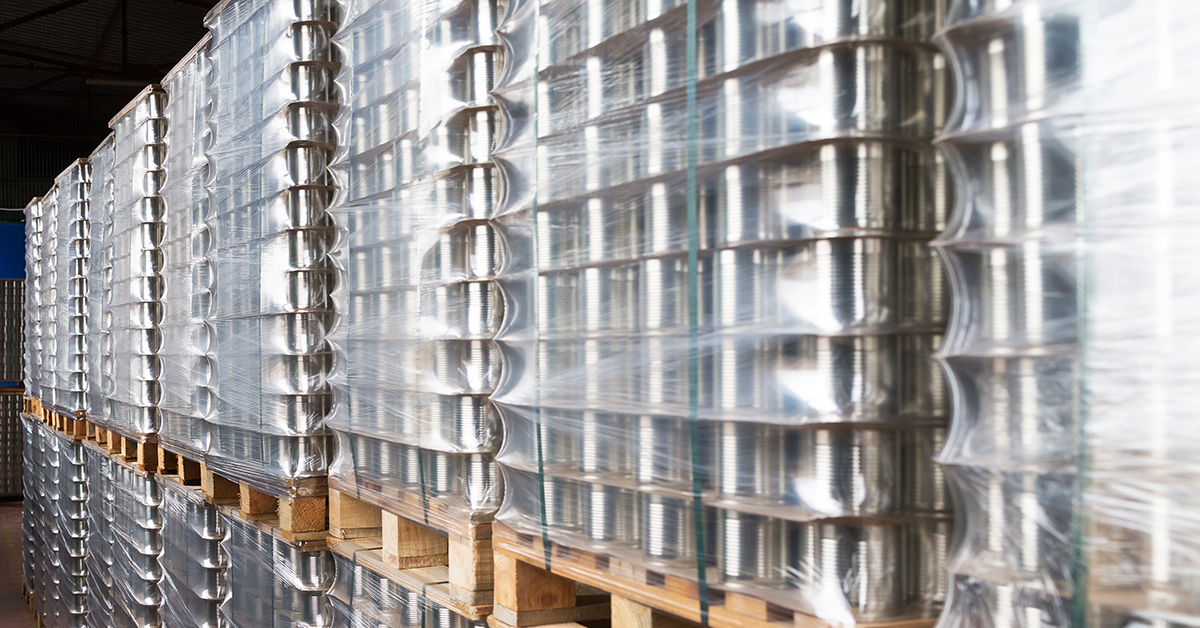
Highly stacked wooden pallets in a warehouse, loaded with hundreds of silver aluminum cans. Each pallet is tightly wrapped in clear protective plastic film, creating a shimmering, reflective surface. The stacks extend deep into the background, illustrating a large-scale beverage supply chain or manufacturing facility.

Beverage supply chains don’t break where you expect

Three fires at an upstream aluminum plant disrupted beverage supply chains that had no direct relationship with the supplier — and exposed what logistics flexibility actually looks like when it matters.

By Charlie Taylor, Vice President of Intermodal Sales, Odyssey Logistics

In late 2025, a major aluminum coil supplier experienced a series of fires at its main production facility. The plant supplied a significant share of North American can stock, and when output dropped, beverage manufacturers with no direct relationship with this supplier had to reconfigure supply plans mid-season. A disruption two tiers upstream became their problem.

The fires pushed supply chain risk further upstream than most beverage producers plan for — and further than most logistics partners can reach.

When the fires interrupted coil supply, Odyssey customers were ready because Odyssey had answers and interventions across the supply chain, including coil intake, transportation, and warehousing between aluminum producers and can manufacturers. When the manufacturer began sourcing coil from South America, Odyssey stood up intake in Savannah, Ga., established temporary overflow facilities, and managed transportation to can manufacturers in Florida. This response drew on relationships already in place — Odyssey was able to serve both the suppliers moving the coil and the manufacturers receiving it.

In our partnerships, Odyssey offers this full range of infrastructure to equip beverage manufacturers with more options and flexibility for their freight.

Where Odyssey fits in your supply chain

From coil intake through finished goods distribution, Odyssey builds its engagement around a manufacturer’s pressure points.

Pressure points are different for every manufacturer. Odyssey manages the supply chain from raw material intake through warehousing, transport and finished goods delivery to licensed distributors and understands each location along the journey.

Here’s how we address each segment.

Production-ready packaging, on demand

For manufacturers managing the packaging front end, the critical variable is whether blanks and coil are available when the line is ready. Odyssey operates just-in-time (JIT)-capable warehousing adjacent to major filling operations in key production markets — in some cases within the same parking lot.

When a filling line needs 42 pallets of 12-ounce blanks, a 30-minute delivery window keeps production moving. Upstream, Odyssey’s metals network handles aluminum coil from port through storage and into can manufacturers across multiple markets. Odyssey’s infrastructure is designed to serve beverage manufacturers’ tight production schedules.

The right mode for every shipment
Manufacturers moving product on predictable schedules have more mode options than they typically use. Westbound lanes are a clear example. Through Odyssey’s rail network, manufacturers can shift volume from truck to rail at 10 to 20 percent below comparable truck costs. This advantage comes from the volume of container capacity Odyssey moves through the US rail network — access that isn’t available through standard freight brokerage.

This same logic applies across other legs. Odyssey can price by leg, so manufacturers optimize against their own rates on specific segments, or take the full move at a single rate. Some manufacturers carry stronger dray rates on certain legs than Odyssey does — in those cases, Odyssey takes the segments where the value is highest and the manufacturer covers the rest.

Scale your warehousing without the long-term commitment

Fast-growing brands don’t have to sign five-year leases to fund growth they’re still forecasting. Odyssey holds the warehouse leases on finished goods facilities, so manufacturers don’t have to commit to long-term square footage before their volume stabilizes. A brand that enters the market with modest space requirements and doubles or triples its footprint within months can absorb that growth without renegotiating a single commitment.

At rail-sided facilities, boxcars arrive direct, we store product first-in-first-out and release it by lot number on customer call, processing 30 to 35 loads per day out of a single facility. Odyssey absorbs the real estate risk so manufacturers can focus on growth.

Visibility through proximity

Multimodal supply chains rarely provide true end-to-end tracking. Rail networks don’t consistently share real-time data, and international legs often require stitching together feeds from multiple sources. For JIT operations, the most reliable visibility comes from operational proximity – working with a logistics partner who is close to your facilities and aligned to your production cadence. When issues surface, visibility becomes a phone call and a fix, not a dashboard refresh.

Operations expertise that handles the unexpected
The people managing Odyssey’s operations have an average tenure of over ten years, with some approaching 35. Supply chain disruptions surface problems no playbook fully anticipates — and the experience of the team closes the gap.

These are operators who have managed through market shifts, carrier failures, and demand swings so many times that nothing fazes them. No matter the issue, they can handle it. Combined long tenures of operational experience also make them Odyssey’s strongest customer advocates, delivering consistent performance on hard problems.

The demand side isn't getting simpler

Shifting consumer preferences and evolving product formats are compounding beverage supply chain complexity — and the pace of change isn’t slowing
The beverage supply chain continues to evolve rapidly. Younger consumers are shifting toward seltzers, energy drinks, and THC-infused beverages, pulling volume away from traditional beverage options. Can formats are following, adopting slimmer profiles that change pallet configurations and storage math across every facility in the chain.
The complexity isn’t easing. A logistics partner that can provide genuine flexibility matters more now than it did three years ago.

Volatility in beverage supply chains rarely shows up where you’re watching. Odyssey’s beverage logistics experts have managed this supply chain long enough to know where problems start before they surface. Start a conversation with one of our experts today.


Frequently asked questions

When does intermodal rail make sense over trucking for beverage manufacturers? Three conditions favor the shift: truck rates are trending upward, the shipment doesn’t require next-day delivery, and the lane has available repositioned container capacity. When all three align, moving product by rail in a 40-foot box can run 10 to 20 percent below comparable truck costs. When truck rates are depressed or timing is tight, the math shifts back toward over-the-road. Odyssey can structure pricing either way — by leg, so manufacturers optimize against their own rates on specific segments, or as a single A-to-B rate across the full move.

What makes beverage supply chains uniquely complex? Beverage supply chains span raw material sourcing, packaging production, blank storage, filling operations, finished goods warehousing, and regulated outbound distribution across multiple modes and geographies. Disruption at any point, including upstream suppliers, like aluminum coil manufacturers, can cascade quickly through the rest of the chain. Most manufacturers manage only a portion of those handoffs directly, which leaves exposure in the segments they aren’t watching.

How does multimodal logistics reduce costs for beverage manufacturers? By matching each leg of the supply chain to the most cost-efficient mode for that lane and timeline. On westbound long-haul moves, rail in repositioned 40-foot containers can run 10 to 20 percent below comparable truck costs. For JIT blank delivery, proximity and dedicated assets eliminate the premium typically associated with short notice moves. Odyssey can price by leg or deliver a single A-to-B rate — whichever approach surfaces the real savings for a given customer.

What should beverage companies look for in a 3PL or 4PL partner? Full-chain coverage, flexible warehousing capacity and an operations team with deep category experience. The ability to respond to supply chain disruption — not just execute a stable plan — has become the differentiator that separates logistics partners from logistics vendors.

How far in advance should beverage manufacturers plan for peak season demand? Manufacturers ordering aluminum coil for peak production need to lock in supply nine to 12 months ahead — coil lead times run long, and secondary suppliers have limited surge capacity. From there, blank can inventory, warehouse space, and transportation capacity all need to be staged in sequence. Odyssey typically works from customer forecasts two to six weeks out for execution planning, but the upstream decisions that make those forecasts achievable start much earlier. Manufacturers that treat peak season as a supply chain event rather than a logistics one is better positioned when demand spikes.

Ready to connect?

Get in touch with one of our supply chain experts today to learn more.

Related posts

Managed Transportation

At Odyssey, we help our customers build more resilient supply chains — end to end. Our managed transportation solutions can be tailored for even the most complex industries. 

Explore how we can support the growth goals for your business, so you can navigate today’s evolving supply chain landscape with confidence.

How Odyssey Uses AI For more Competitive Freight Pricing

Careers at Odyssey

See your impact at Odyssey. Join us as we push the supply chain and logistics industry forward. 

Explore corporate and warehouse roles, and driving opportunities with us.

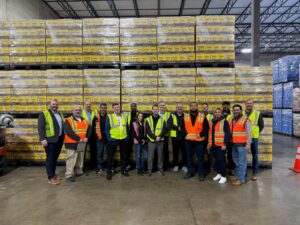
A group of logistics professionals in high-visibility safety vests standing together for a team photo in front of large, floor-to-ceiling stacks of yellow Pacifico beer cases in a Chicago warehouse.