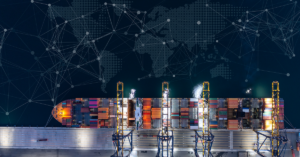
Chemical manufacturers shipping across the U.S. and Europe can protect service, cost, and customer commitments by planning truck, rail, ocean, ISO tank, and inland options as one connected transportation network.
By Will Schweda, Senior Vice President of Sales, Odyssey Logistics
Chemical freight rarely stays in one mode from origin to destination. A shipment may leave a plant by truck or rail, move through a port in an ISO tank, and finish by road, rail, or barge. Each transfer creates another point where equipment, documentation, carrier acceptance, and delivery timing have to line up.
Those challenges apply to domestic U.S. freight, European distribution, and global chemical supply chains. The details vary by lane, but the underlying issue is consistent: when one connection changes, the rest of the transportation plan has to hold.
Multimodal logistics helps chemical shippers identify workable truck, rail, ocean, ISO tank, and inland options before a change in the primary lane puts delivery at risk. Odyssey helps chemical shippers evaluate those options before disruptions occur, connecting mode selection, equipment availability, carrier coordination, and customer delivery expectations into one transportation plan.
A missed connection can change the entire inland plan
Chemical shippers do not have much room for transportation surprises. When a vessel rolls, a terminal changes, or equipment is unavailable, the issue is rarely isolated to one leg of the move. It can affect inland delivery, customer commitments, inventory planning, and cost.
This is where chemical transportation differs from a simple capacity search. A route is not useful because it appears on a rate sheet. It has to fit the product, the equipment (including any specialized equipment), the terminal, and the delivery commitment.
Chemical logistics depends on those details. A bulk liquid moving in an ISO tank, for example, has different routing options from a packaged chemical shipment. The origin, destination, shipment volume, and customer delivery window can change the answer again.
Multimodal transport starts with the handoffs
A vessel delay or port change can create several apparent alternatives. In practice, those options narrow quickly. For priority lanes, transportation teams should validate the details that determine whether a backup route can actually be executed:
- Where the required equipment can be positioned
- Which terminals and carriers have accepted the commodity and equipment type
- Whether the revised route supports the customer’s delivery window
- What shipping documents need review before freight changes mode or terminal
For domestic bulk freight, intermodal rail can be a practical part of the network when origins and destinations are rail served and the lane has sufficient volume and consistency. It can reduce reliance on long haul truck capacity, although rail schedules, equipment cycles, drayage, and final delivery still need to be considered. It is a weaker fit for shipments that need a precise delivery appointment, move between locations without workable drayage, or cannot absorb a longer transit window.
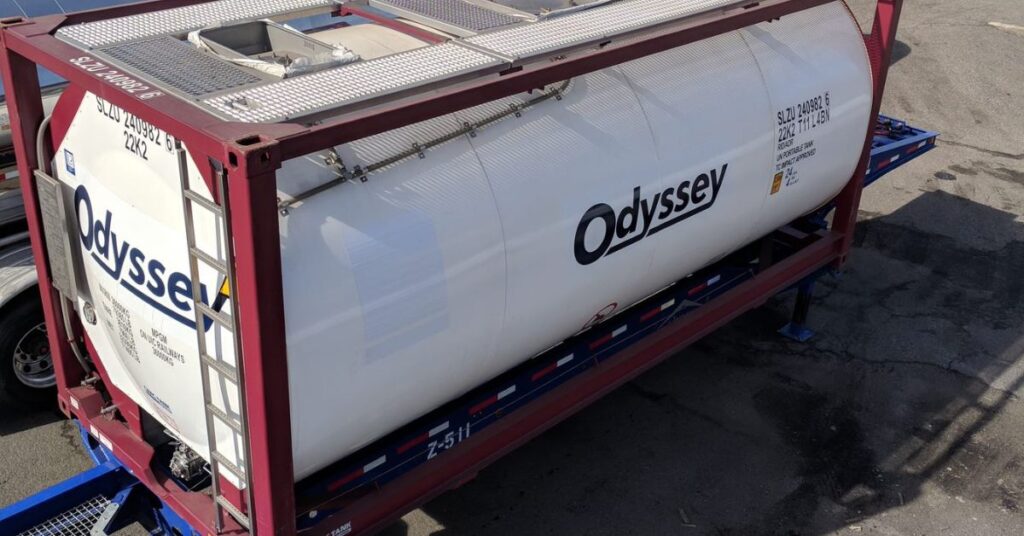
ISO tank intermodal can give eligible liquid chemical shipments flexibility in multimodal shipping across truck, rail, and ocean because the tank sits within a standard 20-foot intermodal frame. To move seamlessly across different modes, it still depends on terminal access, and a delivery plan at the destination. The equipment alone does not solve the lane.
Neither option is automatically the right answer. The point is to understand which options can work on a given lane before a vessel rolls, a terminal becomes constrained, or a customer delivery is already at risk.
| Mode | Where it best fits | What shippers need to account for |
|---|---|---|
|
Truck |
Plant pickup, regional delivery, and first- or final-mile connections |
Carrier approval, equipment availability, route restrictions, and driver capacity |
|
Rail |
Recurring domestic bulk lanes with rail-served origins and destinations |
Equipment cycles, drayage, service schedules, and longer transit windows |
|
Ocean / ISO tank |
Transatlantic bulk liquid freight and established international chemical lanes |
Tank positioning, port cutoffs, terminal handling, and destination inland delivery |
|
European rail or barge |
Inland moves serving established industrial corridors |
Terminal access, local carrier coordination, schedule reliability, and product acceptance |
U.S. rail transportation and European inland networks solve different problems
In the U.S., chemical shippers often rely on long-haul rail transportation and road transport. Rail can provide a durable option for recurring bulk movements, but it depends on rail-served access, realistic transit expectations, equipment availability, and drayage at either end. A facility that is well positioned for truck freight may have limited rail alternatives, regardless of the line-haul rate.
Europe offers a denser mix of roads, railways, ports, and inland waterways. That can create more inland options after freight reaches port, especially for chemical movements that fit established rail or barge corridors. It also adds more handoffs. A shipment may move by truck to a terminal, continue by rail or barge, then return to road transportation for final delivery. The transport plan and the freight information need to stay aligned throughout.
The EU’s eFTI Regulation is scheduled to apply in full on July 9, 2027, and will require Member State authorities to accept electronic freight information shared through certified eFTI platforms. For chemical shippers, the practical takeaway is that shipment data has to be accurate and available when freight changes modes, providers, or countries.
Odyssey’s Europe chemical logistics team helps shippers build those regional realities into a single U.S.-Europe freight plan. European inland delivery should be considered when the export plan is built, not after the ocean leg is already in motion.
Which chemical freight lanes need a backup plan?
Flexible multimodal freight networks do not require a contingency plan for every shipment, but the best candidates are usually high-volume moves, lanes serving time-sensitive customers, shipments with difficult equipment requirements, and routes where a port or terminal change would materially affect final delivery.
From there, for each priority lane, the transportation team should confirm:
- The modes and equipment types that can carry the product
- Carriers and terminals that have accepted the commodity and equipment type
- Where equipment can be positioned if the primary route changes
- Which shipping documents need review when the freight uses a different mode or terminal
- Who has authority to reroute, and how the customer will receive an accurate delivery update
This work is less about developing a binder of contingency plans and more about knowing where the network has real flexibility. A bulk chemical shipping strategy is stronger when equipment, cost, service, and risk are evaluated together instead of shipment by shipment.
What a multimodal logistics partner should manage
For chemical shippers, the harder task is keeping ocean status, rail availability, terminal release information, equipment positioning, final delivery, and customer communication aligned when the plan changes.
A multimodal logistics provider serves as a single point of coordination, with the ability to evaluate the freight and lane before recommending an alternate mode. A good partner should know when a seemingly cheaper option will create a problem at the next terminal, when a carrier change requires document review, and when the customer needs a revised delivery expectation rather than a vague status update.
Managed transportation brings carrier, terminal, and shipment coordination into one operating model. International services support the freight-forwarding and import/export work that sits alongside the inland move. Together, those capabilities help reduce the number of disconnected handoffs a shipper has to manage across the Atlantic.
Transportation obligations vary by commodity, equipment type, mode, and country. Shippers should confirm applicable requirements with qualified legal and compliance advisors. For the international framework governing dangerous goods by road, including ADR updates, consult UNECE’s dangerous goods resources.
A practical way to build more flexible chemical freight lanes
Chemical freight does not become simpler when a vessel rolls, a terminal changes, or equipment is unavailable. Shippers that have already identified the right carrier, equipment, terminal, and mode options can respond with a workable plan instead of restarting the search under pressure.
Odyssey helps chemical shippers develop multimodal logistics strategies across the U.S. and Europe. Consult with Odyssey’s chemical logistics experts about the lanes where coordinated truck, rail, ocean, ISO tank, and inland options could better protect cost and service.